How One Interest Rate Change Could Cost You $100,000 in Buying Power
Many homebuyers focus on the purchase price of a home, but mortgage interest rates often have an even greater impact on what a home actually costs each month. When rates move up or down, your monthly payment changes—and so does the amount of home you can comfortably afford. Understanding this relationship can help buyers make informed decisions and avoid waiting for the "perfect" market conditions.
Why Interest Rates Matter
When you finance a home, you're borrowing money from a lender and paying interest on that loan over time. Even a small change in mortgage rates can translate into hundreds of dollars per month and tens of thousands of dollars over the life of the loan.
Let's look at some real-world examples.
Example #1: Same Home Price, Different Interest Rates
Assume you're purchasing a $500,000 home with 20% down.
- Purchase Price: $500,000
- Down Payment: $100,000
- Loan Amount: $400,000
- 30-Year Fixed Mortgage
At 5.0% Interest
Monthly Principal & Interest Payment: Approximately $2,147
At 6.0% Interest
Monthly Principal & Interest Payment: Approximately $2,398
At 7.0% Interest
Monthly Principal & Interest Payment: Approximately $2,661
Difference Between 5% and 7%: About $514 per month.
That's more than $6,000 annually and over $180,000 throughout the life of the loan.
Example #2: Same Monthly Budget, Different Buying Power
Let's assume your target monthly principal and interest payment is approximately $2,400.
At 5.0% Interest
You could finance roughly $447,000
With 20% down, your purchase price could be approximately $559,000.
At 6.0% Interest
You could finance roughly $400,000
With 20% down, your purchase price could be approximately $500,000.
At 7.0% Interest
You could finance roughly $361,000
With 20% down, your purchase price could be approximately $451,000.
What This Means
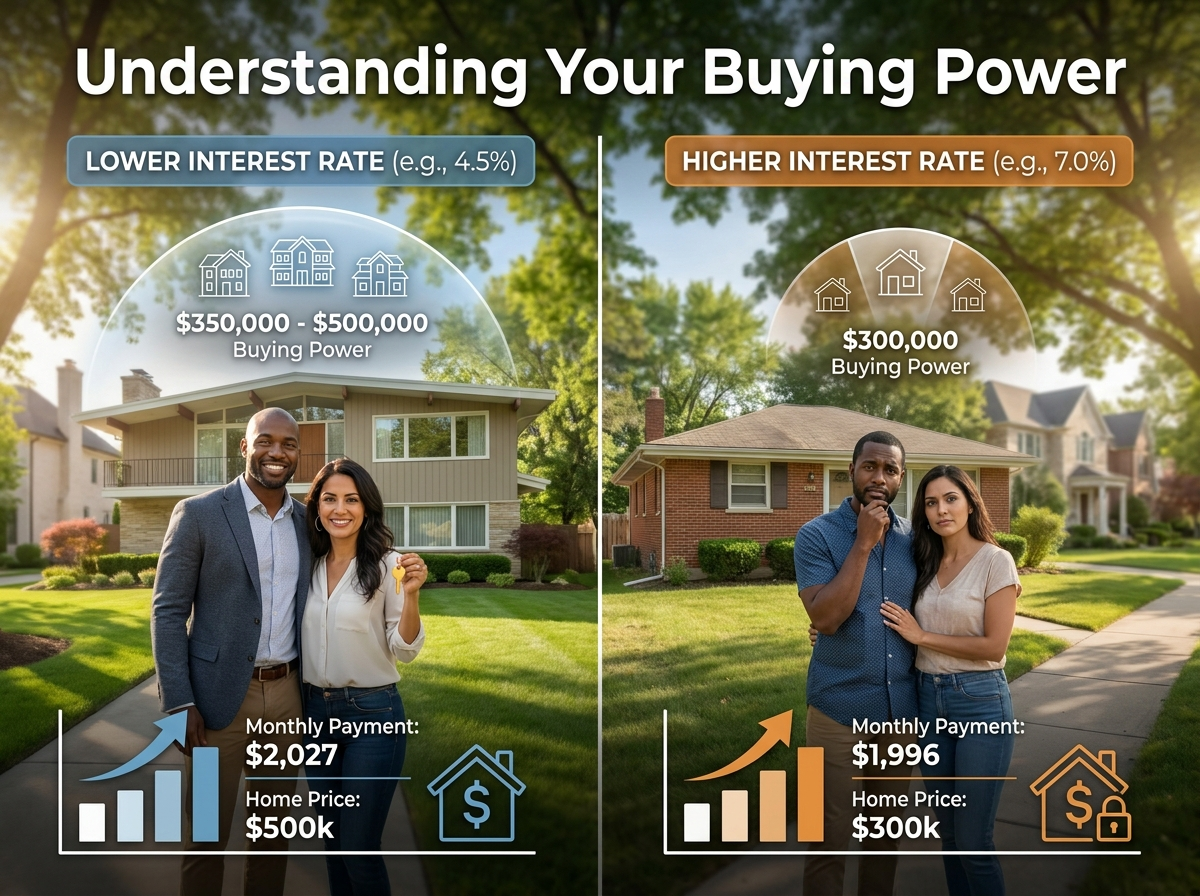
A buyer shopping with the same monthly budget loses more than $100,000 in purchasing power when rates rise from 5% to 7%.
That's often the difference between:
- A starter home and a move-up home
- Three bedrooms versus four bedrooms
- One town versus another
- A home requiring renovations versus one that's move-in ready
The Hidden Cost of Waiting
Many buyers postpone their purchase while hoping rates will fall.
While lower rates can improve affordability, there are two important considerations:
Home Prices May Continue Rising
If home values increase while you're waiting, the savings from a lower interest rate could be offset by a higher purchase price.
Competition Often Increases
When rates decline, more buyers typically enter the market. Increased competition can lead to:
- Multiple offers
- Higher sale prices
- Fewer negotiating opportunities
What About Refinancing Later?
Many buyers overlook an important strategy: buy the home that fits your needs today and refinance if rates decrease in the future. While refinancing isn't guaranteed and depends on future market conditions, it can provide flexibility. You can potentially lower your payment later, but you can't go back and purchase today's home at yesterday's price.
Should You Buy Now or Wait?
The right answer depends on your personal finances, goals, and timeline—not just interest rates.
If you:
- Have stable employment
- Have sufficient savings
- Plan to stay in the home for several years
- Can comfortably afford the monthly payment
Then today's market may still present opportunities regardless of where rates are headed next. The best strategy is to focus on your monthly payment, overall affordability, and long-term goals rather than trying to perfectly time the market.
Final Thoughts
Interest rates are one of the most powerful factors affecting both your monthly payment and buying power. Even a 1% change can significantly impact what you can afford. Before making a decision, run the numbers carefully and evaluate how different rate scenarios affect your budget. A knowledgeable lender and real estate professional can help you understand your options and develop a strategy that aligns with your financial goals.
Thinking About Buying a Home?
Understanding your purchasing power is the first step toward making a smart move. Whether you're buying your first home, upgrading, downsizing, or investing, knowing how interest rates affect affordability can help you make a confident decision.
Categories
Recent Posts